Source Clear Expanding Book Folder for Office, School, and Events
Compare 30 listings for a clear expanding book folder designed for organizing files in offices, schools, and events. Buyers can evaluate materials like PVC and PP, features such as clips and locks, and customization options from verified suppliers.
Key considerations
Products List



Comprehensive Sourcing Guide
Strategic Sourcing Guide for Clear Expanding Book Folders
Procuring clear expanding book folders requires a nuanced understanding of the intersection between transparency, structural integrity, and organizational utility. These items serve as critical tools in office environments, educational institutions, and corporate settings where document visibility and rapid access are paramount. The market offers a diverse array of configurations, ranging from simple multi-ply designs to complex presentation folders with integrated locking mechanisms. Buyers must navigate a landscape where material composition, such as Polypropylene (PP) or Polyvinyl Chloride (PVC), dictates both the clarity and durability of the final product. This guide outlines the essential technical, logistical, and quality parameters necessary for a successful procurement strategy, ensuring that the selected suppliers can deliver products that meet specific operational needs without compromising on compliance or cost-efficiency.
Technical Specifications and Material Composition
The foundation of a high-quality expanding book folder lies in its material selection and structural design. In the current market, Polypropylene (PP) and Polyvinyl Chloride (PVC) are the dominant materials observed. PP is frequently cited for its eco-friendly attributes and rigidity, making it suitable for standard office filing where durability is required without excessive weight. Conversely, PVC variants are often associated with a higher gloss finish and enhanced flexibility, though buyers should verify the specific environmental compliance of PVC formulations. The "clear" aspect of the product is achieved through the use of these transparent polymers, which allow for immediate visual identification of contents without opening the folder.
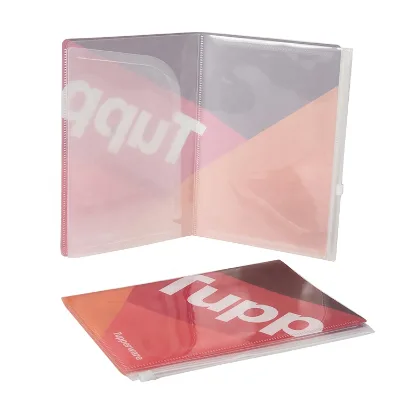
Structural specifications vary significantly between product lines. Some models are designed as multi-ply document bags, featuring multiple internal pockets to separate documents by category. Others function as presentation folders, often incorporating a hardcover design to protect sensitive materials during transport. A critical technical differentiator is the presence or absence of a zipper. While some high-security models include a zipper closure to prevent document loss, standard office variants often rely on a clip mechanism or a simple flap closure. The locking mechanism is another key specification; certain models are equipped with integrated locks for secure storage, while others are designed for open access. Buyers must also verify the standard size compatibility, with A4 being the most common global standard, though customized sizes are frequently available to meet specific branding or storage requirements.
Compliance, Certification, and Environmental Standards
When sourcing office stationery, particularly items intended for widespread use in corporate or educational environments, compliance with environmental and safety standards is non-negotiable. The market data indicates a growing emphasis on "Eco-friendly" features, suggesting that buyers should prioritize suppliers who can substantiate claims regarding the recyclability of their materials. For products made from PP or PVC, verification of the material's safety profile is essential to ensure it does not release harmful volatile organic compounds (VOCs) under normal office conditions.
While specific certification names are not universally standardized across all listings, buyers should request documentation confirming that the manufacturing process adheres to relevant international environmental management systems. The production origin, often cited as Zhejiang, China, or general China-based manufacturing hubs, implies a need for rigorous supply chain auditing. Buyers should verify that the supplier's facilities comply with local labor laws and environmental regulations. Furthermore, the printing process, often described as Offset UV Printing, requires scrutiny to ensure that the inks used are non-toxic and meet the safety standards of the destination market. UV printing offers superior color vibrancy and durability, but the chemical composition of the curing agents must be verified to ensure they do not pose health risks to end-users.
Cost Drivers and Pricing Dynamics
The pricing of clear expanding book folders is influenced by a complex matrix of factors, including material costs, customization levels, and order volume. The observed price range in the market spans from $0.02 to $9.99 per unit, a wide disparity that reflects the difference between basic, unbranded units and premium, highly customized presentation folders. The primary cost driver is the material thickness and type; thicker PP or specialized PVC formulations will naturally command a higher price point. Additionally, the inclusion of features such as zippers, locks, or custom logos significantly increases the unit cost due to the added manufacturing steps and tooling requirements.
Order volume plays a pivotal role in determining the final price. The Minimum Order Quantity (MOQ) typically ranges from 100 to 10,000 pieces, with a common baseline of 1,000 pieces for standard models. Suppliers often offer tiered pricing structures where the unit cost decreases as the order volume increases. For buyers seeking to minimize costs, negotiating based on bulk orders is essential. However, buyers must balance cost savings with the risk of overstocking, especially for customized items that may become obsolete if design requirements change. The packaging details, such as individual OPP bagging and carton specifications (e.g., 100 pcs/ctn with specific dimensions), also contribute to the overall logistics cost, which should be factored into the total landed cost calculation.
Typical Applications and Functional Use Cases
Clear expanding book folders serve a variety of functional roles across different sectors. In corporate environments, they are primarily used for organizing files, managing project documentation, and facilitating client presentations. The "Presentation Folder" classification suggests a high-end use case where the aesthetic quality of the folder, including custom printing and branding, is as important as its organizational function. These folders often feature ten pockets or more, allowing for the separation of contracts, invoices, and marketing materials.
In educational and administrative settings, the "File Box" and "Document Bag" functionalities are more prevalent. Here, the focus is on durability and the ability to hold a large volume of papers without tearing. The "Office" usage category highlights the need for robustness in high-traffic environments. Some models are designed with specific features like labels or clips to facilitate quick retrieval and sorting. The versatility of these products is further enhanced by their ability to be customized with logos and specific colors, making them suitable for corporate branding initiatives or event-specific documentation. Whether used as a "Wordpad" holder or a "Data Book" organizer, the clear design ensures that the contents are always visible, reducing the time spent searching for specific documents.
Supplier Evaluation and Supply Chain Verification
Selecting the right supplier requires a comprehensive evaluation of their capabilities, production capacity, and reliability. The supply ability of top-tier manufacturers can reach up to 500,000 pieces per month, indicating a robust production infrastructure capable of handling large-scale orders. Buyers should verify the supplier's production time, which typically ranges from 20 to 25 working days, and ensure that this timeline aligns with their project schedules. The availability of samples within seven days is a strong indicator of a supplier's responsiveness and quality assurance processes.
Geographic location is another critical factor. Many suppliers are based in Zhejiang, China, with dispatch ports in Ningbo or Shanghai. Buyers should assess the logistical implications of these locations, including shipping costs and lead times to their specific destination. The "OEM" (Original Equipment Manufacturer) and "Customized Logo" capabilities are essential for businesses seeking branded solutions. It is vital to confirm that the supplier has the necessary equipment for offset UV printing and can handle the customization of colors and sizes. Additionally, the packaging details, such as the use of separate OPP bags and specific carton dimensions, should be reviewed to ensure they meet the buyer's storage and shipping requirements.
Quality Control and Long-Term Procurement Considerations
Maintaining consistent quality is paramount in the procurement of office stationery. Buyers should implement a rigorous quality control protocol that includes pre-production sample approval, in-process inspections, and final random inspections. The "Feature" attributes, such as the presence of a clip or the quality of the zipper, must be verified against the agreed-upon specifications. For products claiming to be "Eco-friendly," buyers should request third-party test results or certifications to validate these claims.
Long-term procurement considerations involve building a sustainable relationship with suppliers who can adapt to changing market demands. The availability of customization options, such as logo printing and size adjustments, allows buyers to evolve their product offerings without switching suppliers. Buyers should also consider the scalability of the supplier's production lines to ensure they can meet future demand spikes. Regular communication regarding production timelines and potential delays is essential to maintain supply chain stability. By focusing on suppliers with a proven track record of meeting quality standards and delivering on time, buyers can ensure a reliable supply of clear expanding book folders that support their organizational goals effectively.
Comparative Analysis of Product Attributes
To facilitate informed decision-making, the following table summarizes the key attributes observed in the market for clear expanding book folders. This comparison highlights the variability in features and specifications that buyers must consider when selecting a product.
| Attribute Category | Option A: Standard Office | Option B: Presentation Folder | Option C: High-Security |
|---|---|---|---|
| Material | PP (Polypropylene) | PP or PVC | PVC or Leather/PU |
| Clarity | Clear / Transparent | Clear / Transparent | Opaque / Brown / Black |
| Closure | Clip / Flap | Zipper | Lock / Zipper |
| Pockets | Multi-ply (Standard) | Multi-ply (10+ Pockets) | Multi-ply (Variable) |
| Customization | Logo Available | Full Custom (Color/Size) | Logo & Color Custom |
| Standard Size | A4 | Customized Size | Customized Size |
| Primary Usage | File Box / Office | Presentation / Business | Secure Storage / Data Book |
| Feature | Eco-friendly | High-end Design | Label / Lock |
This table illustrates that while the core function remains consistent, the specific requirements for material, closure, and customization vary widely. Buyers must align their selection with their specific use case, whether it is general office organization, high-end client presentations, or secure document storage. By carefully evaluating these attributes against the supplier's capabilities, buyers can ensure they procure the most suitable clear expanding book folders for their needs.
FAQs
What materials are used for clear expanding book folders?
These folders are commonly made from Polypropylene (PP) or Polyvinyl Chloride (PVC). Some premium options may feature PU or leather materials for a different finish.
Can I customize the size and logo of the folder?
Yes, customization is available for both size and logo. Buyers can request specific dimensions and have their brand logo printed using offset UV printing techniques.
What is the typical minimum order quantity for these folders?
The standard minimum order quantity is 1000 pieces. However, some suppliers may accept orders starting from 100 pieces depending on the specific product model selected.
How long does production take for a custom order?
Production time typically ranges from 20 to 25 working days. Samples are often available within 7 days to verify quality before full-scale manufacturing begins.
Which features are available for securing documents in the folder?
Features include zippers, locks, and clips depending on the model. Some designs offer multi-ply pockets while others include hardcovers for enhanced protection.
Where are these folders manufactured and shipped from?
Most products originate from Zhejiang, China, with dispatch ports in Ningbo or Shanghai. The supply ability can reach up to 500,000 pieces per month.